Wednesday

Commitment to the Craft


The first days of school are upon us! This week I had the privilege to be part of the welcome week for our new art teachers. It was delightful to meet this enthusiastic cohort of teachers with a vast range of teaching experiences and life stories.  There is a magic about this time of year. We are so fortunate to have this week set aside to connect with our newest colleagues. The week's events relies on the leadership and expertise of our experienced teachers to lay a strong foundation for the school year. 

In art and education, mentorship is a beacon that illuminates the path of growth, understanding, and inspiration. Just as a skilled artist wields a brush to transform a blank canvas into a masterpiece, so too do experienced art teachers wield their wisdom to assist and support new art teachers. 

Untitled (Studio) (2014), Kerry James Marshall, is a monumental picture depicting an artist’s workspace—was recently acquired by The Met. A veritable catalogue of the genres of painting, it combines still life, portraiture, and landscape with trompe l’oeil and abstraction, and includes many references to the Old Masters. (The Metropolitan Museum of Art)

I was at the Metropolitan Museum of Art recently and happened upon this Kerry James Marshall painting. It really stopped me in my tracks. Immediately I was thinking about my high school art teacher, the eclectic studio classroom and the profound impact she had on my life. Then reading the wall plaque for more context it referenced Marshall's relationship with artist Charles White. So, I did a little digging...so pardon my bird walk for a moment...

Kerry James Marshall was introduced to Charles White's work during his early years as an art student. White's artistic approach and dedication to addressing social issues resonated deeply with Marshall's own concerns about representation and identity. 

Marshall admired White's ability to convey emotion and humanity through art, and this admiration extended to the way White used his art as a form of activism and social commentary. White's emphasis on storytelling, symbolism, and the power of representation left a lasting impression on Marshall's artistic practice.

Beyond artistic influence, there's a personal connection between Kerry James Marshall and Charles White. Marshall had the opportunity to meet and interact with White during his early years as an artist. White became a mentor figure to Marshall, offering guidance and insights into navigating the art world as an African-American artist. Their interactions allowed Marshall to deepen his understanding of the importance of using art as a platform for addressing social issues and advocating for change.

So all of that to give a heartfelt shout out to all the art teachers who embrace the role of mentorship: you are the architects of inspiration, the cultivators of talent, and the keepers of artistic heritage. Your mentorship is the masterpiece that keeps on evolving—a masterpiece that enriches the education landscape of tomorrow.

Mentorship is a collaborative creation, a space where skills are honed, insights are shared, and the craft of teaching is elevated to an art form in itself. This partnership benefits both parties in developing their teaching craft. 

As the welcome week is coming to a close, I know our newest colleagues are exhausted and feel like they are swimming in information, but I promise you this, they know they have a support system! 


Sunday

Untilled

Last weekend I was visiting the MOMA and happened upon a quite thought provoking sculpture that ahs me a buzz! In the sculpture garden I found Pierre Huyghe's sculpture "Untilled  [Reclining Female Nude]" is a thought-provoking and unconventional artwork that challenges traditional notions of sculpture and the relationship between art and its environment. Created in 2012, the sculpture features a life-sized figure of a reclining female nude made from an amalgamation of various materials, including resin, wax, plants, and living organisms. 

This artwork challenges the conventional notions of sculpture by integrating living elements and highlighting the significance of the environment in shaping the artwork's meaning and appearance. It invites viewers to consider the fluidity of art, the connection between humans and nature, and the interplay of creation and decay in the constantly evolving world around us.

 The sculpture's presence within a living ecosystem transforms the viewer's experience from passive observation to an engaging and introspective encounter with the interconnectedness of art and the environment.


Monday

Growth Mindset


Lizards symbolize physical, emotional, &/or intellectual growth and the act of leaving behind what you’ve outgrown.

Shedding and letting go.

Lizards are wizards in regards to self-amputation and regeneration. While on the surface, the action sounds awful, it’s a self-defense mechanism so the Lizard can get out of challenging situations. Over time, the tail grows back, but different than before, maybe in size or color.

Evolving and adapting.

Lizard’s defensive techniques symbolize the need to release harmful aspects of yourself or attributes. Holding on to old habits or outworn beliefs hold you back from achieving good health, happiness, or success.

Lizards learn and move on…continuously adapting to the surroundings. 

Growth mindset. 


Tuesday

Living the Dream


Not the City of Angels    

 “Creating the dream is living the dream, and constantly being able to take one more step, even when that step looks too difficult to take, even when we think we may fall too far, or too hard, even when we know it'll mean going against the convention of what the people around us are doing, taking one more step keeps us creating the dream, which in essence is living the dream.”

                                                                                                                                                                                ― Kio Briggs

Fairfax County Art Region Scholastic Art Awards Ceremony!


Sunday

Celebrating the Identity of Art Educators beyond the Classroom


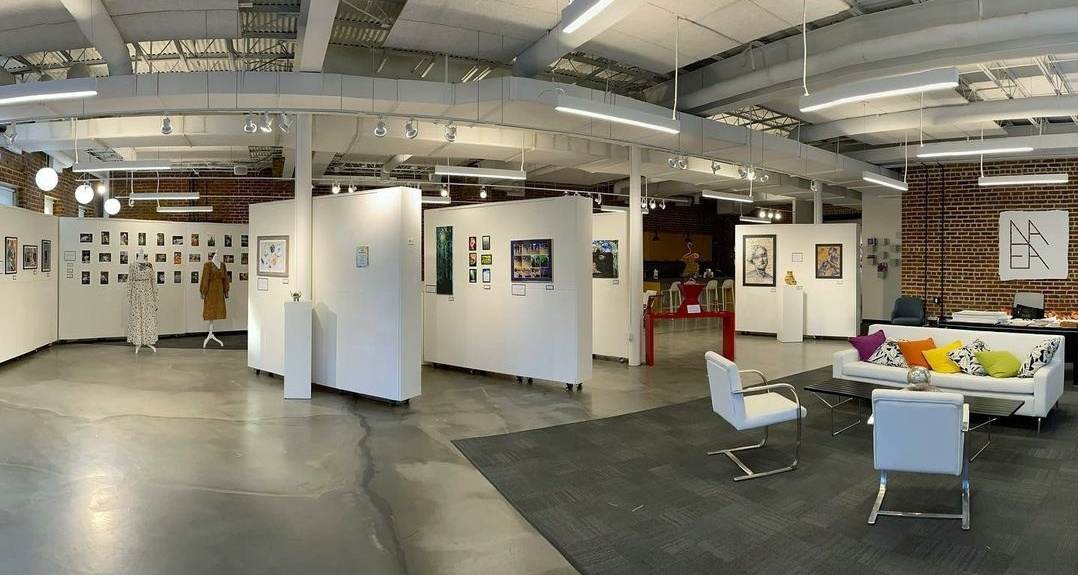
This weekend I had the pleasure of attending and speaking at the closing reception for the the GMU NAEA exhibition, Celebrating the Identity of Art Educators beyond the Classroom. It was at the stellar NAEA headquarters, such a beautiful space. I am so flattered they asked me to give remarks! I thought I might share them here as well. Enjoy!

Good evening everyone,

   I would first like to acknowledge the artwork on display here this evening and the artists in the room.  It truly is a testament to the hard work and dedication that artist teachers have put into their craft. In fact, I think it’s incredibly exciting that these teachers have continued to stay creative and motivated in their personal art making practice.

   I’d like to reflect on the importance of art education, and embracing a creative life. Jerry Saltz said, “Creativity is not a talent; it’s a way of operating.” This speaks to the fact that art is not only a skill, but a way of life. Some people think art as something that is separate from our everyday lives, something we can pick up and put down when it suits us. But art is essential to the human experience, and to our lives as teachers.  As art educators, we have a unique opportunity to provide students with artistic skills, as well as nurturing the ability to think deeply about the world and challenge the status quo around us. The opportunities we afford to our students can not only provide them with a deeper understanding of the arts, but will also help build their confidence, improve their social skills while fostering a sense of community.

   Let’s be real for a second…as an art teacher in today’s world we straddle the line between tik tok and ted talks as a means to engage and inspire our students. But what happens when the day ends and we are in our own version of tik tok, do we continue to dance and play? How does our Ted Talk go?

    The wise bell hooks said, “In a world where knowledge is power, to be creative is to be powerful.” It’s our responsibility to ourselves to harness this power, to remain inspired to make art even after our teaching day is over.

   So, I urge you to continue your personal creative journey. Embrace the intersection between the art in your life with the art you create with your students. Make time to nurture and feed your creative soul to remain inspired. It is a win for you as well as those you teach. 

     I’m so moved by this exhibition, which features the artwork of art educators. These artists have found a way to continue in their creative pursuits while also devoting their time to teaching. In the words of music producer Rick Rubin, “Creativity is not a hobby, it’s a way of life.” 

Thank you for listening, have a wonderful rest of your evening!


Learning New Skills


 “You are always learning. At the end of each day, you know something you didn't know at the beginning. We're all learning on the job. This is true even when the thing you've learned is that you know less than you thought.”

― Jerry Saltz, How to Be an Artist


We recently spent some time visiting art rooms and rebuilding drying racks. This is simple maintenance that just takes time and attention to detail. I was pleasantly surprised at how satisfying it was to fix these simple machines. It was also very gratifying to know that was one thing we could take off of the art teachers to-do list!